We work for
Clients we are proud of


What affects bog mat load capacity
A bog mat does not have one load capacity that applies to every site and every machine. Its suitability depends on the mat itself, how it is supported and the loads applied to it. A mat that performs satisfactorily on a prepared access route may be unsuitable over weak ground or beneath a concentrated crane outrigger reaction.
Before choosing timber bog mats, establish what the equipment will do and what the ground can support. A headline tonnage without those details is not enough to specify an access route or working area.
The mat and the ground need separate checks
There are two related questions. Can the mat carry the applied load in the proposed arrangement, and can the ground beneath it support the resulting pressure? Either can limit the use of the system.
A strong mat can still settle or tilt if the ground gives way. Conversely, firm ground does not make a damaged or incorrectly specified mat suitable for the load. The assessment must consider both rather than treating the mat as a remedy for every ground problem.
Our crane mats information provides a starting point for product enquiries. For lifting work, the mat arrangement needs to be considered within the lifting plan and the assessment of the working area.
Timber species, beam dimensions, the construction of the mat and its condition influence performance. Thickness alone is not a load rating. Two mats with the same external dimensions may differ in material specification, construction details or damage from earlier use.
Moisture, deterioration and wear also need consideration. Check the beams, connections, edges and handling provisions, using the supplier’s inspection criteria. A quick visual check can identify obvious defects, but it cannot establish the structural capacity of an unknown mat.
Ask for information about the actual product or batch rather than relying on a photograph or a generic description of hardwood. Where a project needs a defined performance, the relevant assessment or design must relate to that specification and its proposed support conditions.


Vehicles and plant transmit loads in different ways. A wheeled vehicle applies them through its tyres and axles. Tracked plant has a different contact pattern, which can change during movement and operation. Crane outrigger reactions depend on the crane configuration and lift, so they cannot be inferred by simply dividing the crane’s total weight by the number of outriggers.
Provide the relevant manufacturer or lift-planning data for the equipment. State whether it will travel, turn, park or operate on the mats. Loads during braking, slewing or passing over a transition may differ from those associated with standing still.
Timber crane mats and purpose-designed outrigger pads are also not automatically interchangeable. The chosen product needs to suit the load, the supporting ground and the arrangement specified for the operation.
Ground information should cover the route and any operating positions. Pay attention to made ground, recent excavations, buried structures, services, drainage and changes in level. A surface can appear firm while a weaker layer lies beneath it.
Rain, water movement and repeated traffic can alter that support during use. The inspection plan should therefore consider changes in conditions as well as the initial installation. Movement at joints, increasing settlement or visible damage calls for the area to be taken out of use and reassessed under the site’s procedures.
A longer or wider mat does not guarantee that its entire footprint will act as an effective load-spreading area. That depends on the stiffness of the product, its contact with the ground and the loading arrangement. Coverage calculations are useful for ordering quantities, but they do not prove load capacity.
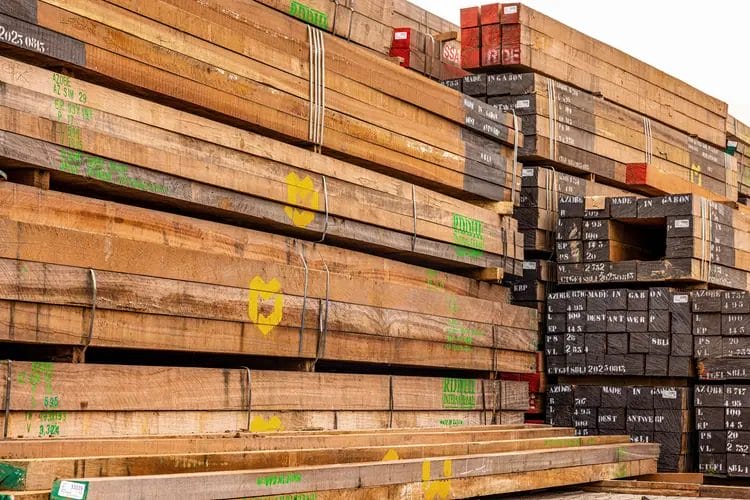

When a mat spans an opening, it acts as a structural member rather than a fully supported access surface. Bending, deflection and the support at each end become critical. A rating or successful use on the ground cannot be transferred to a bridge arrangement.
Do not specify a crossing from the mat length or thickness alone. Use a design for the span, loads and supports, or select a purpose-designed crossing solution.
For a useful discussion, include the site location, ground information, layout and the dimensions of the working area. Add the relevant wheel, axle, track or outrigger load data and explain the operating movements. Tell us how long the mats are needed and what equipment is available for installation.
For UK crane work, HSE’s lifting operations guidance explains the need for competent planning and supervision. Mat selection and ground support belong in that preparation.
Explore our bog mats and request a quote with your project details. We can discuss supply requirements while the site team confirms the appropriate design and conditions of use.
Clients we are proud of