We work for
Clients we are proud of


Bog mats only become useful site access once they have been delivered, unloaded and installed in the right arrangement. Those stages need to be planned together. If the delivery vehicle cannot reach the unloading point, or the installation plant has nowhere suitable to work, the programme can be disrupted before the first mat is in place.
For a UK project, confirm the supply and transport arrangements for the actual destination, then agree the site responsibilities. Installation, inspection and removal should be explicit parts of the plan rather than assumptions attached to the order.
Define what the route or working area will be used for, the relevant loads and the ground conditions. Mark entrances, corners, passing places and operating positions. The specification and layout should follow those requirements before the delivery is booked.
Review the installation sequence as well as the finished layout. Plant may need an assessed area from which to position the first mats. The sequence also needs to preserve access for subsequent deliveries and other site activities.
Our bog mats information provides the starting point for product enquiries. Share the design or agreed specification where the application requires one, alongside the quantity schedule.
Separate the scope into supply, transport, unloading, installation and removal. Confirm which party handles each stage and what equipment, personnel and information it needs. A transport booking does not automatically include a laying service.
For delivery to the UK, ask about the lead time, delivery terms and any shipment documentation arrangements. VM Group’s delivery and transport information explains the arrangements to discuss. The quotation and order should record what has been agreed for your destination.
Name the site contact who can coordinate arrival and resolve access questions. If the programme changes, notify the relevant parties before the vehicle is dispatched rather than relying on a site team to rearrange the delivery on arrival.


Check the access road, gate width, overhead restrictions and any site weight limits against the delivery vehicle. Allow room for manoeuvring and consider how the vehicle will leave after unloading. The unloading position must be assessed for the loads and operations involved.
Provide the agreed handling equipment and a suitable storage area for material awaiting installation. Check the unit weights and handling method for the actual mats. Timber moisture and specification can affect weight, so equipment selection should not rely on a rough generic estimate.
Plan stable stacking and prevent access to the unloading area by people who are not involved. The method should address the risk of falling loads, moving plant and trapping hands or feet between mats.
The installation area needs to match the assessed conditions. Review drainage, recent excavations, buried services, surface levels and any preparation specified for the work. A dry-looking surface is not proof that the layers beneath it will provide adequate support.
If conditions differ from the plan, pause and resolve the change before installation continues. Do not add improvised supports, extra layers or fill and assume that the original assessment still applies.
Keep the installation plant within suitable operating areas. Where the sequence depends on previously laid mats, their arrangement must also be suitable for the plant and operations used during installation.

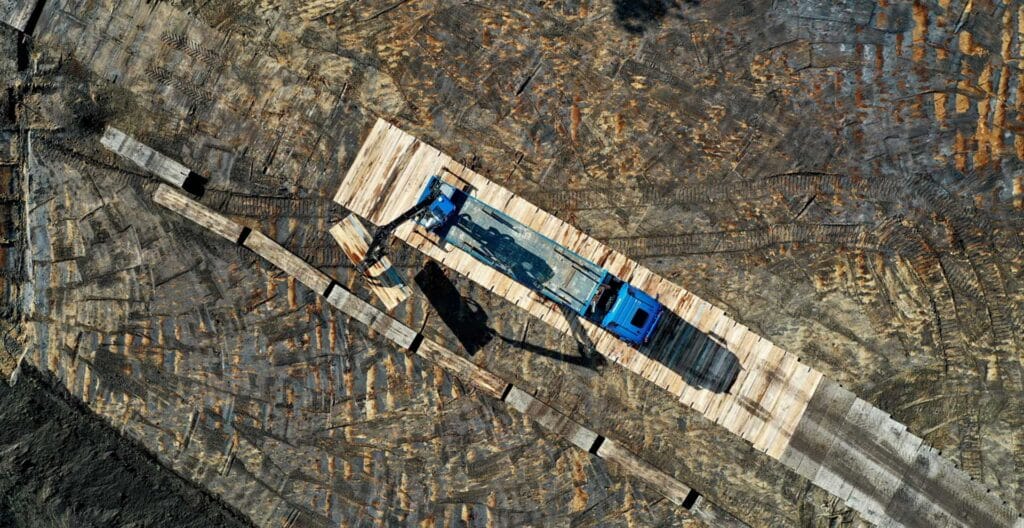
Install the mats to the specified orientation, support and joint details. Plan movements so that completed sections remain accessible and the team is not boxed in by its own layout. Manage other site traffic during the work rather than expecting drivers to find a way around the operation.
Transitions to an existing road or paved area need attention. Check level changes, exposed edges and any features that could affect tyres, tracks or pedestrians. Connections, restraints or additional edge details should follow the product and installation requirements.
For crane-assisted work, use suitable lifting arrangements and competent personnel under the site’s lifting procedures. Do not use damaged handling provisions or improvised lifting methods to maintain the programme.
Before use, confirm that the installed layout matches the agreed plan. Check visible condition, transitions and any restraint details, and verify that the route is ready for its intended traffic. Record relevant limitations on use and who is responsible for inspections and maintenance.
Conditions can change during the project. Arrange checks appropriate to weather, traffic and the application. If mats move, damage develops or ground support deteriorates, use the site’s process for taking the affected area out of use and reassessing it.
Keep the layout under control. Moving mats to create a new shortcut or widening a working position can change the assessed arrangement. Agree changes before the route is used in a different way.
Establish when the mats can be removed without cutting off access for remaining plant or deliveries. Confirm collection notice, loading arrangements and any cleaning or contamination requirements. Make sure the handling equipment and site contact are available for the return operation.
Whether you need bog mat hire or a purchase, send the layout, quantity, site conditions and programme to request a quote. Planning the supply and site work together helps avoid additional handling and leaves fewer questions to resolve on delivery day.
Clients we are proud of