We work for
Clients we are proud of


The decision to hire or buy bog mats depends on how often you need them, what your projects require and whether you can manage the material between jobs. A purchase price and a weekly hire rate are not directly comparable without a period of use and a clear list of included costs.
Start with the same specification and quantity for each option. Then compare the likely use, logistics and responsibilities over the period you are planning for.
List the jobs where the mats are expected to be used and how long each deployment will last. Separate confirmed work from possible future demand. Count the gaps when owned material would be stored rather than earning its place on a site.
Frequent, predictable use can support a purchase. Occasional work or changing specifications may favour hire. If you regularly need a core quantity but face temporary peaks, a combination of owned mats and hired additions may be worth pricing.
There is no universal number of months after which buying becomes cheaper. The result changes with the specification, hire terms, transport, maintenance and your own operating costs.
For hire, include the charge for the expected period, delivery, collection and any installation or removal service. Add ancillary items and charges that may apply for cleaning, loss or damage. Establish the minimum period and extension arrangements.
Ask when the charging period starts and finishes. Booking collection and ending hire may not be the same event under the agreement, so confirm the terms rather than relying on an assumed end date.
Our bog mat hire information helps you start that discussion. Use an actual project quotation for the cost comparison; a headline rate may exclude important parts of the service.


Ownership brings costs beyond purchase and the first delivery. Budget for storage, movements between sites, handling equipment, inspections, cleaning and repairs. Include the cost of capital or financing where relevant to your business and allow for material being unavailable while it is repaired.
Consider who will manage the stock. A useful fleet needs records, identification and a process for withdrawing damaged mats from use. Material stored in the yard is not automatically ready for the next project simply because it belongs to you.
Explore bog mats for sale and, where the condition suits your requirements, used bog mats. Compare new and used purchase options on their actual specification and condition rather than assuming the lower initial price will give the lower lifetime cost.
Choose a defined planning period and calculate the expected total cost of each route. For ownership, any resale value should be a realistic assumption rather than a guaranteed credit. For hire, allow for likely overruns instead of assuming every project finishes on the earliest date.
Test a few scenarios. What happens if a major project is delayed, the fleet is used less often or more mats are needed? What if transport distances increase or storage becomes unavailable? A decision that only works under the most optimistic assumptions may be difficult to manage in practice.
Keep the calculation separate from suitability. A cheaper option still needs the right specification and an assessed layout for the site. You cannot recover a poor product choice by using the material more often.
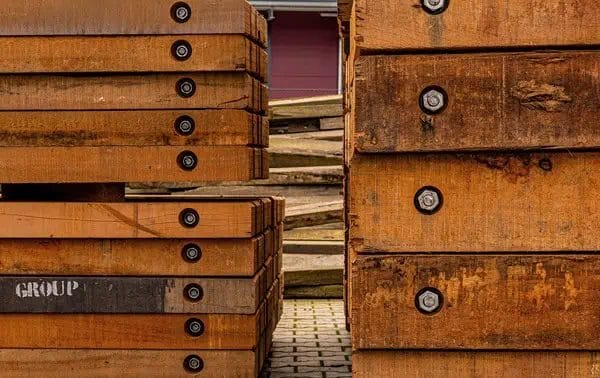
Owned mats need storage space, safe access for loading and equipment suitable for the product. Check how quickly you can move them between sites and whether the same material will be required on overlapping jobs.
Hiring can simplify the arrangements for individual projects, but only within the service scope agreed with the supplier. Confirm whether the price includes supply only, transport, installation or another service. Neither hire nor ownership removes the site team’s responsibility to establish the ground and loading requirements.
For a UK destination, discuss the shipment and programme using the actual location. Our delivery and transport page describes the options to agree with VM Group.
A fleet that suits a regular type of work may be less suitable when the ground, plant or site access changes. Hiring can allow you to source a different specification for a particular job, subject to availability. Buying may be more practical when the requirements remain consistent and you have the staff and space to manage the material.
Prepare your expected quantity, specification, utilisation and site locations, then request a quote for the options you are considering. The useful question is which arrangement supports your project pipeline at a realistic total cost.
Clients we are proud of